Muse and the EU: no launch date, no DPA, and your options
Meta Muse runs in the US and Canada only, the Meta Model API behind it ships with no data processing agreement and no EU residency, and the Confidential VM promised for later this year does not settle who the GDPR controller is. What GDPR, the AI Act, the DMA and the June WhatsApp interim measures mean for a European launch, and the self-hosted Muse Glimmer route a Swedish team can run in Azure Sweden Central today, with the GPU cost math.

Muse vs Hermes Agent vs OpenClaw: who should run which
Meta Muse, Hermes Agent and OpenClaw all promise a persistent personal agent, but one runs only on Meta servers with Meta's model, one is a venture-backed open-source runtime with a Stockholm cloud region, and one is a non-profit project that Microsoft confirmed on Friday as the runtime under Copilot Autopilot. Security models, real monthly costs and a decision guide for Swedish teams.

Muse connectors decoded: Meta's directory vs open MCP
Meta opened Muse connectors to developers on 18 September and logged more than 1,500 applications in under a week, then named Walmart, Sephora, Shop Pay, PayPal, GitHub and Notion among the next partners. The directory is a Meta-reviewed channel with an unpublished fee, custom connectors are unreviewed, and MCP is the durable integration to build first, before you fill in the Muse form.
Meta Muse: the first mass-market personal agent, decoded
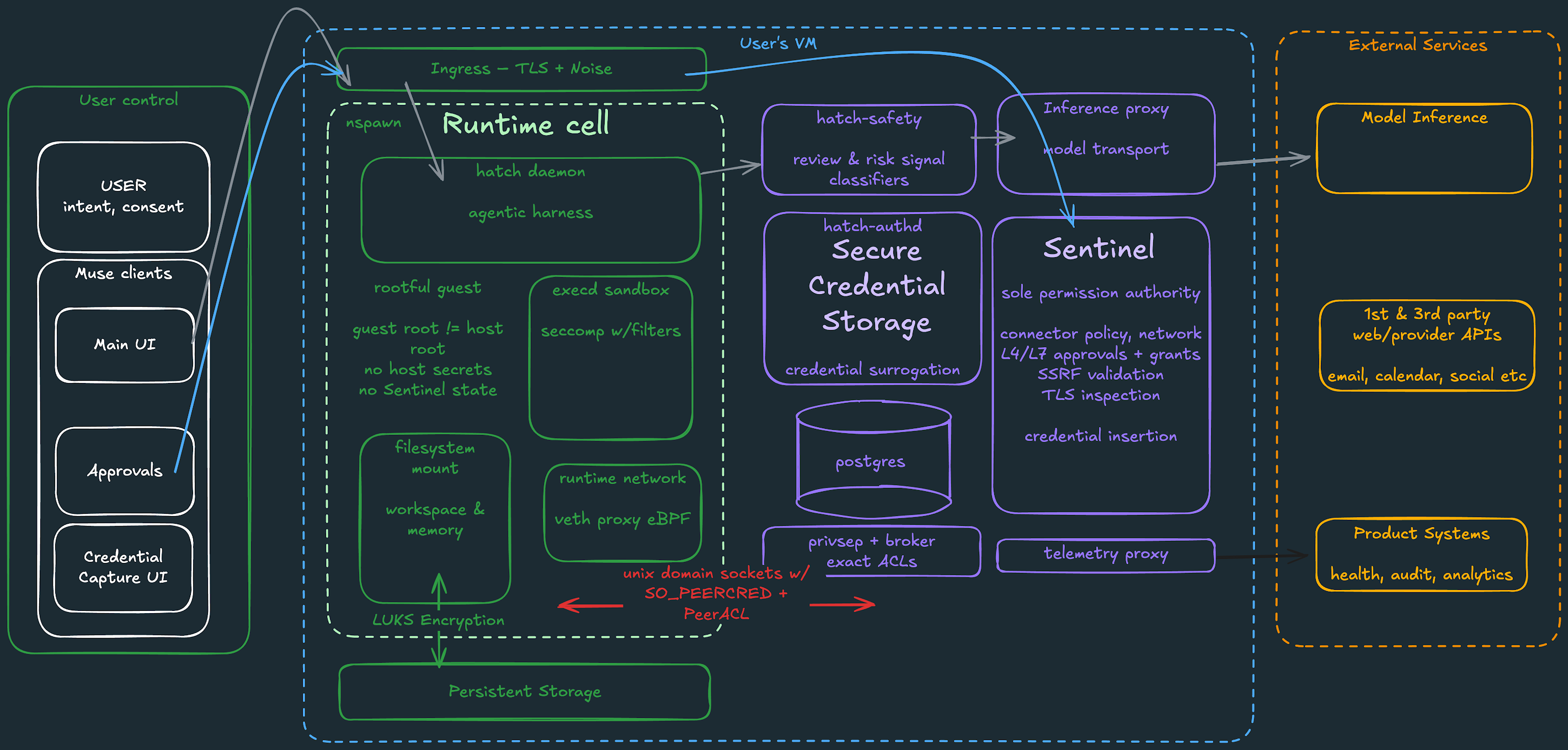
Meta's Muse hit number one on the US App Store ten days after its 8 September launch, with 2.8 million global installs by day twelve, by giving every user a dedicated cloud VM that browses, books and buys on their behalf. The architecture (Secure VM, a separate Sentinel approval agent, secrets hidden from the model, one-time Stripe cards) is now the consumer baseline, and the business model is a cut of every transaction.