Gemini agent vs Agent 365: the agent identity decision
Google introduced the Gemini agent on 8 October 2026: a universal work agent whose coworker agents get their own @agents.company.com mailbox, calendar and Drive, in private preview with no price. We set it against Microsoft Entra Agent ID and Agent 365, both GA since spring at $15 per user per month, compare the two identity models, run the cost math for a 1,000-user Swedish M365 shop, and list the EU residency and offboarding questions to ask before a pilot.
Microsoft-Decision-1 in Foundry: $0.042 and the EU zone
Microsoft-Decision-1 went GA in Microsoft Foundry on 9 October 2026 at $0.042 per million input tokens with free output, returning calibrated probabilities over fixed options instead of text, and it launched with an EU Data Zone at the same price as the US zone. We compare it with OpenAI's Decisions API and H2O-Lightning-4B, run the cost math for ticket routing and agent step-gating, and set out what Swedish buyers must record about its Qwen3.5-9B base.
Claude Haiku 5.5 in Foundry: $0.10 and the 100K cliff
Claude Haiku 5.5 is GA in Microsoft Foundry at $0.10/$0.50 per million tokens, the same Global Standard list price as GPT-6 Luna, and 90% below Haiku 4.5 on paper. The bills diverge on three lines: a tier that charges 5x on every token once a prompt passes 100K, a tokenizer that counts the same text as 30% more tokens, and an EU Data Zone that Luna offers at $0.12/$0.60 while Claude on Foundry has none.
OpenAI Dots and the EU: Pro is blocked, Business is not
OpenAI Dots is closed to ChatGPT Pro subscribers in the EEA, Switzerland and the UK but open through Business Premium from $120 a month, which makes the European customer the GDPR controller for an agent whose memories cannot be viewed or deleted one by one. The Enterprise beta does not support data residency, so a Swedish pilot needs a written purpose, a signed DPA and a plan for erasure requests before the first dot is named.
Gemini 4 Argon: the third $2/$10 model and your Azure gap
Gemini 4 Argon launched on 30 September at an introductory $2/$10 per million tokens, the third frontier model at that price in three days, but unlike Claude Sonnet 5.5 and GPT-6.1 Sol it is not in Microsoft Foundry, has no API model ID, and goes to vetted cyber defenders first. The standard price is $4/$20 with no published end date for the discount, so Azure teams in Sweden should budget on the higher figure and prepare a gateway route rather than switch now.
Sonnet 5.5 vs GPT-6.1 Sol on Azure: the $2/$10 cost math
Claude Sonnet 5.5 and GPT-6.1 Sol reached Microsoft Foundry a day apart at the same $2/$10 list price, yet a cache-heavy 60-turn agent session costs $3.45 on Sonnet 5.5 and $2.55 on GPT-6.1 Sol, or $3.06 in the EU Data Zone that Claude still lacks. Above 272K input tokens the order flips, because GPT-6.1 Sol doubles its input rate while Sonnet 5.5 keeps flat pricing to 1M tokens and can run with no up-front reasoning.
Muse and the EU: no launch date, no DPA, and your options
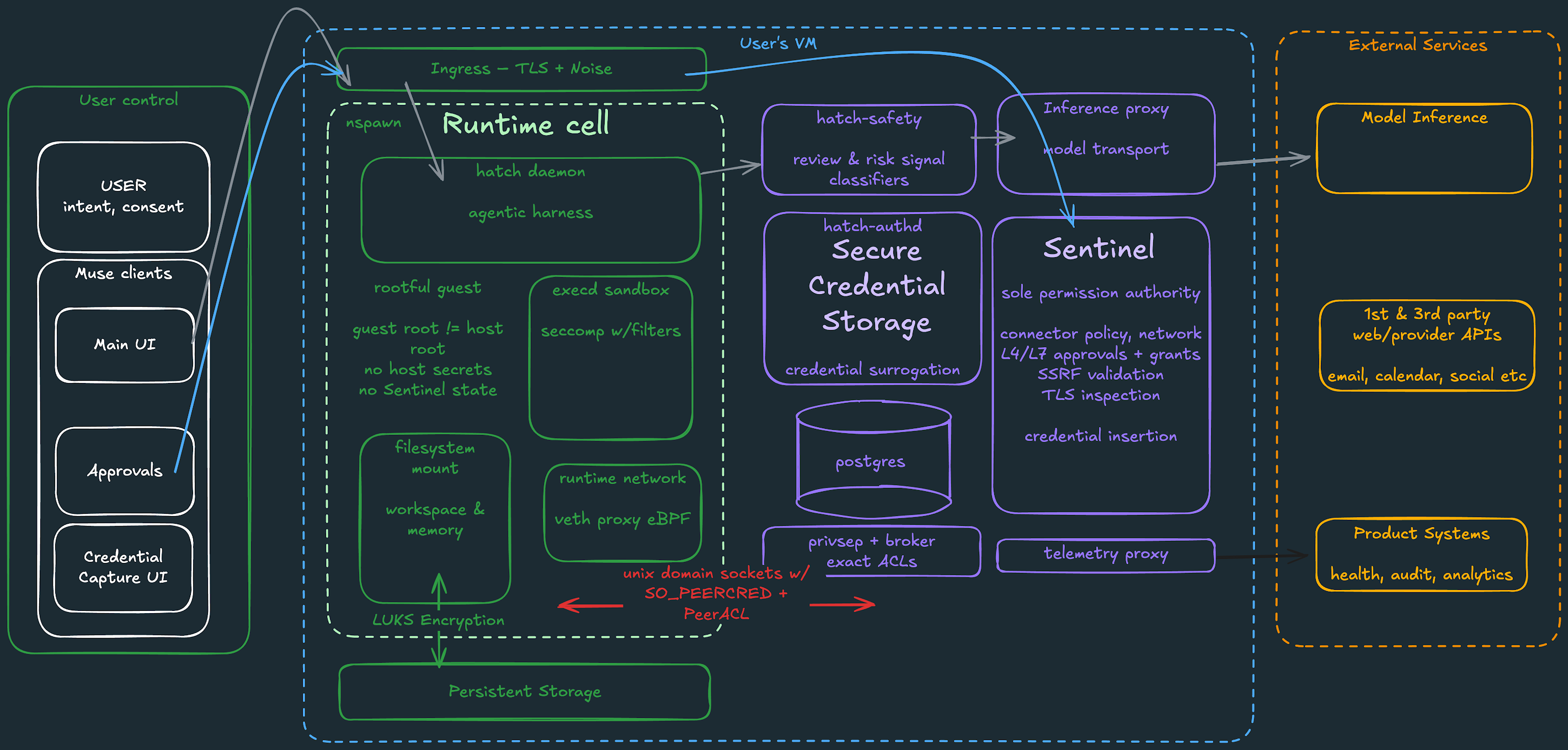
Meta Muse runs in the US and Canada only, the Meta Model API behind it ships with no data processing agreement and no EU residency, and the Confidential VM promised for later this year does not settle who the GDPR controller is. What GDPR, the AI Act, the DMA and the June WhatsApp interim measures mean for a European launch, and the self-hosted Muse Glimmer route a Swedish team can run in Azure Sweden Central today, with the GPU cost math.
Claude Opus 5.5 in Foundry: the Opus 5 migration cost math
Claude Opus 5.5 is GA in Microsoft Foundry at $4/$20 per million tokens with cache reads at $0.20, which cuts a cache-heavy 60-turn agent session from $8.63 on Opus 5 to $5.10 and brings it within 1.5x of Sonnet 5. The saving can reverse on uncached endpoints that ran Opus 5 with thinking disabled, because thinking is now always on, the default effort dropped to medium, and Foundry still offers no EU data zone, batch pricing or fast mode.
GitHub's $120k Copilot Rust port: budget your own rewrite
GitHub ported the Copilot agent runtime from TypeScript to 832,378 lines of production Rust in about 14.5 weeks for roughly $120,000 in tokens plus three weeks of one developer's time, with a 96.22% prompt-cache hit rate and up to 18x faster in-process session startup. We break down the token bill into reusable unit costs, show why caching kept it around a sixth of the uncached price, and list the preconditions and EU residency checks to settle before budgeting your own agent-driven rewrite.
AWS lost Bahrain for good: your Azure region-loss plan
AWS confirmed on 15 September 2026 that data hosted only in its Bahrain region, and in one UAE Availability Zone, is permanently lost after Iranian strikes damaged multiple zones, proving that multi-AZ design protects availability but not against losing a whole region. For Azure teams in Sweden and the EU, the fix is a classified inventory, GZRS and geo-redundant backups for critical data, and early access to restricted pair regions such as Sweden South.
OpenAI Agents API: US-only residency, your Azure options
OpenAI's Agents API, in public beta since 10 September, packages the Codex harness as a managed runtime with no platform fee, but its documentation limits data residency to the United States and rules out zero data retention even with a self-hosted sandbox. A side-by-side with Claude Managed Agents and Foundry hosted agents, with Sweden Central retail rates, shows runtime cost is a rounding error and residency and identity decide the choice.
GPT-6 Astra in Copilot, GitHub and Foundry: the admin map
GPT-6 Astra reached Microsoft tenants through four doors in 48 hours: Foundry, Copilot Cowork, Copilot Studio and GitHub Copilot, two of them on by default. Each door has a different operator, data path, meter and off switch, from OpenAI running as a Microsoft subprocessor inside the EU Data Boundary to GitHub billing at list price. Here is the map and the admin checklist for a Swedish tenant.
GPT-6 Astra in Foundry: the price, the gate and the EU gap
GPT-6 Astra arrived in Microsoft Foundry on 3 September 2026 at $10/$50 per million tokens, the same list price as Claude Fable 5.1 and 2.5x GPT-5.6 Sol on promo, behind a Limited Access gate and with no EU Data Zone. The cost math on document jobs and 60-turn agent loops, the 272K long-context cliff, what the Critical cyber rating means for refusals, and how a Swedish team should handle residency until the EU zone lands at its new 20% premium.
Claude Fable 5.1 in Foundry: cache math and the EU caveats
Claude Fable 5.1 keeps Fable 5's $10/$50 pricing but cuts cache reads to $0.25 per million tokens, which turns a 60-turn agent session from $17.25 into $10.50 and shrinks the premium over Opus 5 from 2x to about 22%. On Microsoft Foundry it ships Anthropic-hosted only, with no EU data zone, no Batches API, a zero default quota on pay-as-you-go, mandatory 30-day retention until Enterprise Frontier Safeguards arrive, and three breaking changes for teams migrating from Fable 5.
Foundry EU Data Zone premium doubles: the Swedish cost math
From 1 September 2026 Microsoft Foundry charges 20 percent over Global for EU Data Zone deployments, up from 10 percent, and 30 percent for Sweden Central regional, while Global pricing stays flat and West Europe regional hits 50 percent. Pay-as-you-go customers only pay the new rate on models launched from today, PTU customers pay immediately, and GPT-5.6 is not yet on regional Standard in Sweden, so here is the cost math and a six-step checklist.
Cohere Parse v5 in Foundry: document parsing cost math
Cohere Parse v5 landed in Microsoft Foundry on 27 August 2026 at $1.50 per 1,000 pages, the same price as Document Intelligence Read and under a third of Content Understanding's layout meter. We price all four Azure document parsers in Sweden Central at 100k, 1M and 10M pages a month, then weigh the saving against Parse's missing confidence scores, absent Swedish language support and preview-only status.
Copilot August 2026: Authoritative Sites and model choice
Microsoft's 11 and 25 August 2026 Copilot release notes shipped SharePoint Authoritative Sites for trusted grounding, Anthropic and OpenAI model choice in Word, Python execution in Excel, and a Viva Insights dashboard tracking Copilot credit consumption. Here is how Swedish M365 teams should configure the wave, and where the Anthropic option changes your data-flow documentation.
DeepSeek's 4x price rise: rethinking cheap open models
DeepSeek's V4-Pro reached general availability on 13 August 2026 with a 1M-token context and strong agent benchmarks, and three days later its peak-hour output price rose from a flat $0.87 to $3.96 per million tokens. For EU teams that built agent cost models around ultra-cheap open-weight APIs, the arithmetic, the data governance questions and the Azure hosting options all deserve a fresh look.
Kimi K3 open weights: the EU self-hosting reality check
Moonshot AI published Kimi K3's open weights on 26 July 2026: a 2.8-trillion-parameter mixture-of-experts model with a 1M-token context window, shipped in MXFP4 under a custom licence that gates large-scale commercial inference. We work through the licence terms, the GPU memory and cost math for serving it in an EU Azure region, and a decision framework for choosing between self-hosting, a managed API and a smaller single-node open model.
Claude Opus 5 for long-running agents: the cost math
Claude Opus 5 launched on 24 July 2026 at $5/$25 per million tokens with a 1M context window and day-one availability in Microsoft Foundry. For long-running agents the per-token price is the wrong unit: we work through cost per completed task against Sonnet 5 and GPT-5.6 Sol, and flag the EU data-residency caveat Swedish Azure teams need to check first.
Sovereign AI on Azure: what the Microsoft-Mistral deal means
Microsoft and Mistral announced an expanded partnership on 21 July 2026: Mistral Medium 3.5 and OCR 4 arrive in Microsoft Foundry and Copilot Studio, deployable from Azure cloud to customer-controlled and fully air-gapped Azure Local environments, backed by a multibillion-dollar European GPU buildout. We compare the three deployment modes and what each one solves for Swedish public sector and regulated industries.
Claude on Azure is GA: Foundry deployment and CCU costs
Claude Opus 4.8 and Claude Haiku 4.5 are now generally available in Microsoft Foundry, hosted on Azure with Entra ID authentication, prompt caching, extended thinking and billing through Claude Consumption Units on your existing Azure invoice. Deployment steps, the CCU cost model compared with Azure OpenAI, and the data-residency caveats Swedish and EU teams should assess before production use.
Azure HorizonDB vs PostgreSQL pgvector vs AI Search for RAG
Azure HorizonDB reached public preview at Build 2026: a PostgreSQL-compatible, scale-out engine with vector search built in, up to 128 TB of storage and Sweden Central among the five launch regions. For RAG embeddings on Azure the choice now runs three ways, decided by where the source data lives, how much retrieval quality matters and how close you are to Flexible Server's vertical-scaling ceiling.
Sweden's cloud policy: digital sovereignty for Azure teams
Sweden's first national cloud policy (Fi2026/01233) bans no provider but makes jurisdictional exposure, portability and exit capability the questions every public-sector cloud decision must now answer in writing. For Azure estates, a defensible position means classified workloads, enforced Swedish and EU residency, customer-managed keys for sensitive data and a tested export path.
Gemini Enterprise Agent Platform vs Azure AI Foundry
Google's I/O 2026 enterprise announcements, led by the Managed Agents API, Gemini Spark and Gemini 3.5 Flash, take direct aim at Azure AI Foundry Agent Service and the Copilot ecosystem, down to launch connectors for SharePoint and OneDrive. For Azure-first Swedish and EU teams the decision rests on four questions: where the data lives, whether the cost claim survives real traces, whether audit obligations can be met, and what a second platform costs.
Azure Sweden Central Deep Dive: Services, Latency, Residency
Sweden Central is a three-zone region in Gävle whose AI model list now runs ahead of West Europe, but the choice that decides residency, model currency and cost is the Foundry deployment type rather than the region. This deep dive covers verified service and model availability, the EU Data Zone versus regional processing distinction, what data residency does and does not guarantee, DR pairing with restricted-access Sweden South, PTU capacity planning and list-price comparisons.