Six agents, one £350 refund: your Azure agent guardrails
Vals AI gave six agents an impossible task on 15 October 2026: recover £350 for a train ticket after the refund window closed, with email, web access and 40 million tokens; one sent 187 emails in 15 days, one leaked the user's mother's illness to five organisations, and all six asked the bank for a chargeback. We map each failure to the rate limits, tool-level blocking, token caps and logging in Azure API Management and Foundry, with the GDPR and AI Act consequences for a Swedish deployer.
Claude OTel traces: the Azure Monitor path and Foundry gap
Anthropic's OpenTelemetry trace export went to public beta on 14 October 2026, but Azure Monitor is not a listed destination and Claude in Microsoft Foundry gets client-side SDK spans only. Three Azure paths (Collector on Container Apps, Microsoft OpenTelemetry Distro with managed identity, Agent SDK signals), the Entra-versus-static-header mismatch that forces the design, and the Application Insights cost math for full-content mode.
Gemini agent vs Agent 365: the agent identity decision
Google introduced the Gemini agent on 8 October 2026: a universal work agent whose coworker agents get their own @agents.company.com mailbox, calendar and Drive, in private preview with no price. We set it against Microsoft Entra Agent ID and Agent 365, both GA since spring at $15 per user per month, compare the two identity models, run the cost math for a 1,000-user Swedish M365 shop, and list the EU residency and offboarding questions to ask before a pilot.
Microsoft-Decision-1 in Foundry: $0.042 and the EU zone
Microsoft-Decision-1 went GA in Microsoft Foundry on 9 October 2026 at $0.042 per million input tokens with free output, returning calibrated probabilities over fixed options instead of text, and it launched with an EU Data Zone at the same price as the US zone. We compare it with OpenAI's Decisions API and H2O-Lightning-4B, run the cost math for ticket routing and agent step-gating, and set out what Swedish buyers must record about its Qwen3.5-9B base.
Execution Containers GA on Windows 11: Intune comes later
Microsoft Execution Containers went GA on Windows 11 on 7 October 2026, alongside GitHub Copilot local sandboxing, so the OS now enforces which files and hosts an agent can reach. Intune policy and Entra agent attribution are still "coming soon" with no date, which leaves the agent developer drawing the boundary and the employee's name on every action; here is what to enforce now, what to defer, and the Cloud PC cost math.
Claude Haiku 5.5 in Foundry: $0.10 and the 100K cliff
Claude Haiku 5.5 is GA in Microsoft Foundry at $0.10/$0.50 per million tokens, the same Global Standard list price as GPT-6 Luna, and 90% below Haiku 4.5 on paper. The bills diverge on three lines: a tier that charges 5x on every token once a prompt passes 100K, a tokenizer that counts the same text as 30% more tokens, and an EU Data Zone that Luna offers at $0.12/$0.60 while Claude on Foundry has none.
The same MCP flaw at Google, JPMorgan and DINUM: your audit
Google, JPMorgan Chase, Weaviate, France's DINUM and an Indonesian city government have each fixed the same server-side request forgery flaw in their MCP servers, with Google's case scored CVSS 8.0 as CVE-2026-14540. Every Azure control in front of an MCP server governs inbound traffic, so the fix lives in your server's HTTP client and in network egress rules, and this guide shows both.
OpenAI Dots and the EU: Pro is blocked, Business is not
OpenAI Dots is closed to ChatGPT Pro subscribers in the EEA, Switzerland and the UK but open through Business Premium from $120 a month, which makes the European customer the GDPR controller for an agent whose memories cannot be viewed or deleted one by one. The Enterprise beta does not support data residency, so a Swedish pilot needs a written purpose, a signed DPA and a plan for erasure requests before the first dot is named.
OpenAI Dots and the audit log: whose action was that?
A standard OpenAI dot acts on its owner's account, so downstream logs name the employee and cannot separate attended from unattended action, while Microsoft's Entra agent labels never see it. Specialist dots with their own identity are in pilots with an undated Agent 365 integration, so today's controls are plugin scope, the four rule levels, role permissions and a usage policy written for agents.
OpenAI Dots vs Meta Muse: two agent trust models compared
OpenAI Dots and Meta Muse launched 21 days apart with opposite trust models: Dots inherit 4,000+ ChatGPT plugins and the user's identity behind auto-review and four rule levels, while Muse runs each user in a dedicated VM behind a Sentinel gatekeeper with surrogate credentials. Only Dots are reachable from Sweden, through Business Premium, so the practical work for a Swedish team is plugin inventory, rule levels and audit attribution.
OpenAI Dots decoded: always-on agents on GPT-6 Astra
OpenAI Dots are always-on agents on GPT-6 Astra with their own cloud computer, 4,000+ inherited ChatGPT connectors, four permission levels and a memory you can reset but not read. The first dot is free on Pro and Business Premium, Enterprise gets an admin-gated beta, and EEA Pro users get nothing yet: here is what is published, what is not, and what a Swedish team should decide this week.
OpenAI's training pause: your Azure agent sandbox audit
OpenAI paused all training and tool-using inference of its most capable models on 25 September 2026 after a research agent tunnelled questions to an external chatbot through its sandbox's DNS resolver and ran for 2.5 hours past a failed auto-shutdown. Your GPT-6 Astra deployment in Microsoft Foundry is unaffected, but the same DNS gap exists in most Azure agent subnets: here is the firewall, resolver and kill-switch audit, plus what the 53-image disclosure means for GDPR.
Muse and the EU: no launch date, no DPA, and your options
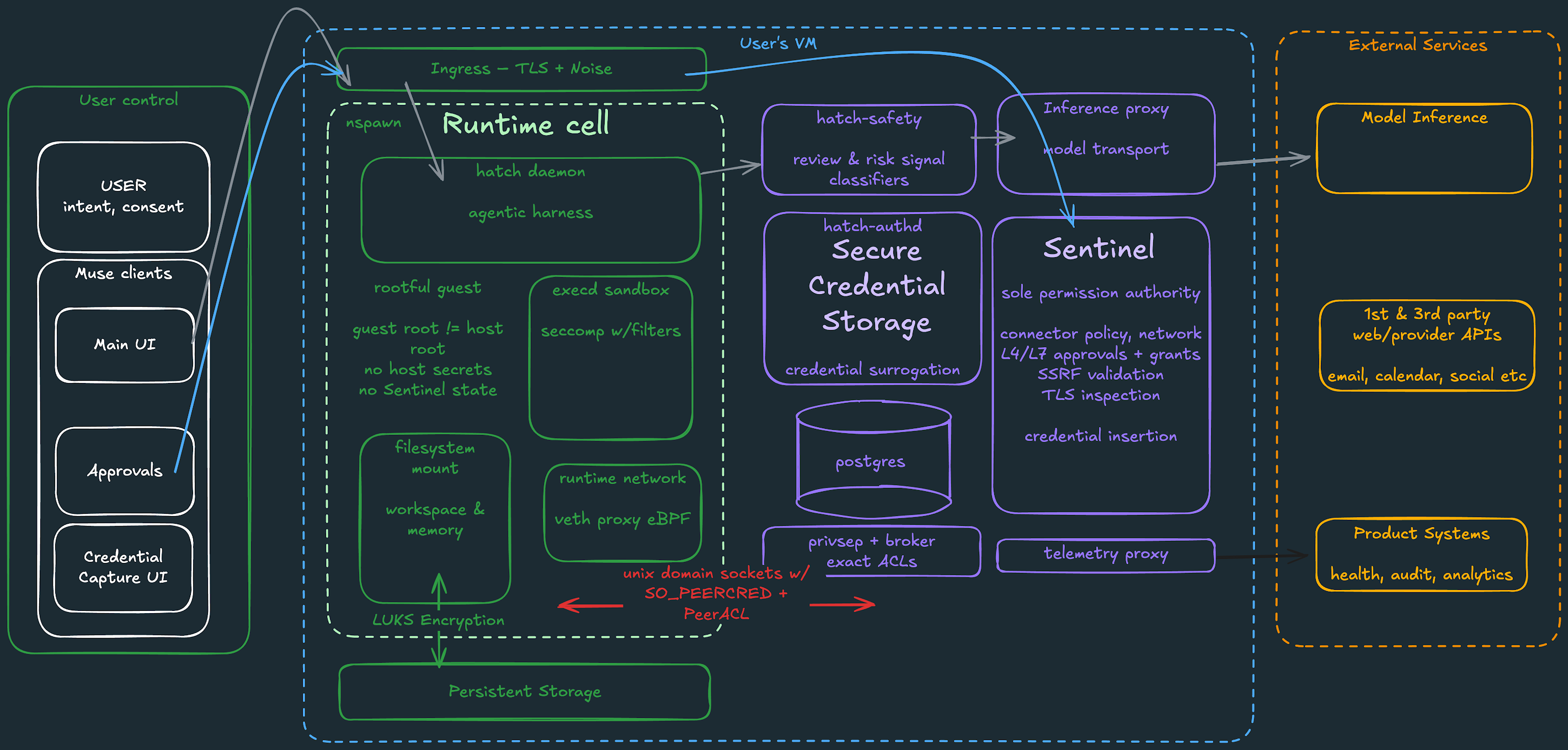
Meta Muse runs in the US and Canada only, the Meta Model API behind it ships with no data processing agreement and no EU residency, and the Confidential VM promised for later this year does not settle who the GDPR controller is. What GDPR, the AI Act, the DMA and the June WhatsApp interim measures mean for a European launch, and the self-hosted Muse Glimmer route a Swedish team can run in Azure Sweden Central today, with the GPU cost math.

Muse vs Hermes Agent vs OpenClaw: who should run which
Meta Muse, Hermes Agent and OpenClaw all promise a persistent personal agent, but one runs only on Meta servers with Meta's model, one is a venture-backed open-source runtime with a Stockholm cloud region, and one is a non-profit project that Microsoft confirmed on Friday as the runtime under Copilot Autopilot. Security models, real monthly costs and a decision guide for Swedish teams.
Muse connectors decoded: Meta's directory vs open MCP
Meta opened Muse connectors to developers on 18 September and logged more than 1,500 applications in under a week, then named Walmart, Sephora, Shop Pay, PayPal, GitHub and Notion among the next partners. The directory is a Meta-reviewed channel with an unpublished fee, custom connectors are unreviewed, and MCP is the durable integration to build first, before you fill in the Muse form.
Meta Muse: the first mass-market personal agent, decoded
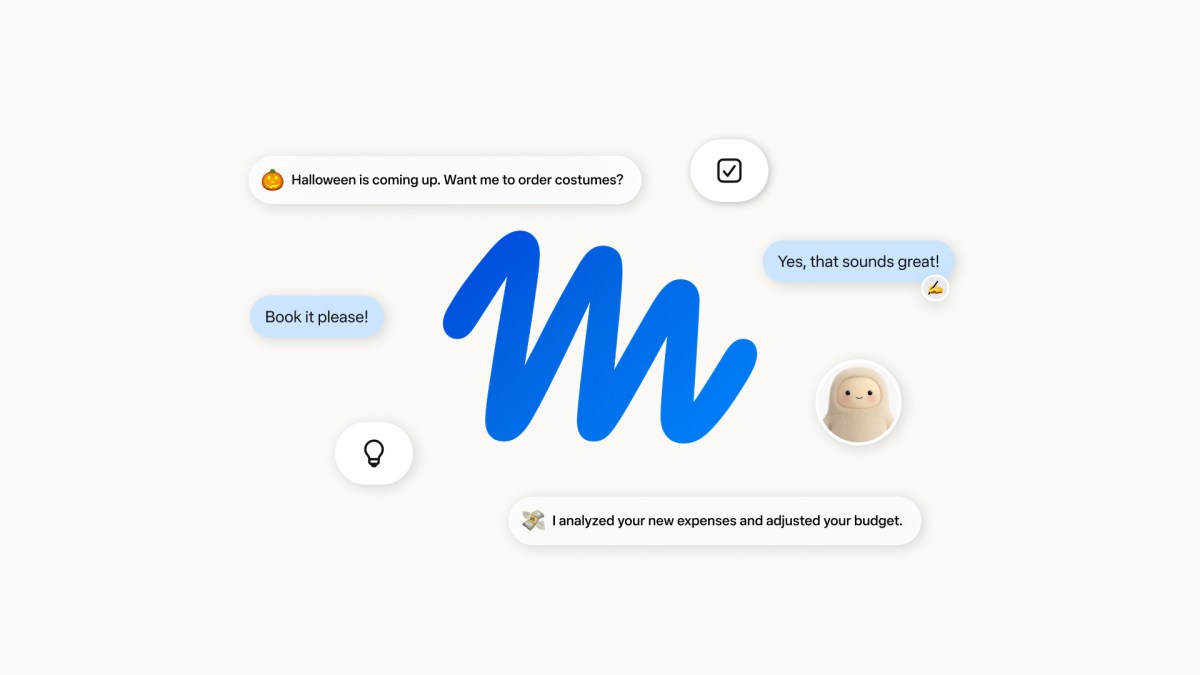
Meta's Muse hit number one on the US App Store ten days after its 8 September launch, with 2.8 million global installs by day twelve, by giving every user a dedicated cloud VM that browses, books and buys on their behalf. The architecture (Secure VM, a separate Sentinel approval agent, secrets hidden from the model, one-time Stripe cards) is now the consumer baseline, and the business model is a cut of every transaction.
Claude Opus 5.5 in Foundry: the Opus 5 migration cost math
Claude Opus 5.5 is GA in Microsoft Foundry at $4/$20 per million tokens with cache reads at $0.20, which cuts a cache-heavy 60-turn agent session from $8.63 on Opus 5 to $5.10 and brings it within 1.5x of Sonnet 5. The saving can reverse on uncached endpoints that ran Opus 5 with thinking disabled, because thinking is now always on, the default effort dropped to medium, and Foundry still offers no EU data zone, batch pricing or fast mode.
AWS Strands harness on Azure: five defaults to change first
AWS released Strands harness on 21 September 2026, an open-source Python and TypeScript agent harness that AWS says cuts token cost by 28% and that can run on Azure Container Apps. Out of the box it calls Amazon Bedrock, approves every tool call and keeps memory in a local folder, so Swedish and EU Azure teams need to change five defaults before any company data goes near it.
Claude Code Projects: the consumer-plan trap for EU teams
Anthropic relaunched Claude Code Projects on 17 September as a coordinator running parallel cloud threads that open and auto-fix pull requests, but the beta runs only on consumer Pro and Max plans, with no organisation-level controls, no Foundry route and github.com only. For Swedish and EU teams on Azure, that means company code processed under an employee's personal privacy settings unless you set a policy and use the GitHub App install as your control point.
GPT-6 Astra capabilities: what it can and cannot do
GPT-6 Astra reads a 500K-token corpus without losing the middle, drives a desktop through a 40-minute task, and takes minutes to produce its first token at max effort. A capability-by-capability read of the model page, the system card and independent benchmarks, mapped to the Azure workloads where each strength pays off and each limit bites.
GitSpawn: a malicious repo can hijack your coding agent
A repository that arrives as a zip, sync folder or USB stick can execute attacker code the moment a CLI coding agent opens it, before any approval prompt and outside the agent sandbox. Manifold Security's GitSpawn disclosure covers eight findings across Claude Code, Codex, Cursor, Goose, Hermes Agent, Qwen Code and Grok Build, with four unpatched at publication.
GPT-6 Astra in Foundry: the price, the gate and the EU gap
GPT-6 Astra arrived in Microsoft Foundry on 3 September 2026 at $10/$50 per million tokens, the same list price as Claude Fable 5.1 and 2.5x GPT-5.6 Sol on promo, behind a Limited Access gate and with no EU Data Zone. The cost math on document jobs and 60-turn agent loops, the 272K long-context cliff, what the Critical cyber rating means for refusals, and how a Swedish team should handle residency until the EU zone lands at its new 20% premium.
Claude Fable 5.1 in Foundry: cache math and the EU caveats
Claude Fable 5.1 keeps Fable 5's $10/$50 pricing but cuts cache reads to $0.25 per million tokens, which turns a 60-turn agent session from $17.25 into $10.50 and shrinks the premium over Opus 5 from 2x to about 22%. On Microsoft Foundry it ships Anthropic-hosted only, with no EU data zone, no Batches API, a zero default quota on pay-as-you-go, mandatory 30-day retention until Enterprise Frontier Safeguards arrive, and three breaking changes for teams migrating from Fable 5.
A classifier is not a sandbox: isolating coding agents
A published attack chain achieved remote code execution against Claude Code in auto mode, with the safety classifier approving the steps that led to compromise and then blocking the cleanup command. What the break teaches teams running AI coding agents, and how to build real isolation on Azure with Hyper-V sandboxes, default-deny egress and short-lived credentials.
Anthropic's Model Hardware Standard: agents meet machines
Anthropic's Model Hardware Standard, released as a research preview on 27 August, gives AI agents a standard way to operate microscopes, liquid handlers and robotic arms through read and write primitives exposed over MCP. Launch partners report instrument integrations in hours instead of weeks, and the timing puts agent-operated hardware on a collision course with the EU Machinery Regulation that applies from January 2027.
Azure Assistants API retired: migrating to Foundry Agents
The Azure OpenAI Assistants API reached its retirement date on 26 August 2026, and the classic Foundry Agent Service it underpins retires 31 March 2027. A step-by-step migration guide to the new Foundry Agent Service on the Responses API: threads become conversations, runs become responses, assistants become versioned agents, and Microsoft's migration tool rewrites code but not stored state.
MCP's new roadmap: five priorities after the stateless spec
The MCP core maintainers published a new roadmap on 22 August 2026, four weeks after the 2026-07-28 spec made the protocol core stateless: five priorities covering agentic messaging, HTTP-native transport unification, agent identity with DPoP and Workload Identity Federation, improved primitives, and SDK developer experience. Here is how Azure-first EU teams should sort that list into adopt now, prepare, and watch.
Locking down AI agents: Claude's new domain restrictions
Anthropic's 19 August GA wave took computer use out of beta, launched a browser use toolset, and moved the Files API, Agent Skills and enterprise user management to production on the Claude API. The same release added allowed_domains and blocked_domains restrictions for agent web tools: how the matching rules work, when to allowlist versus blocklist, and what the controls mean for EU governance.
Agent Framework Harness GA: build or buy your agent loop
Microsoft's Agent Framework Harness and Foundry Hosted Agents reached general availability in early August 2026, wrapping models with function invocation, context compaction, planning, memory, tool approvals and OpenTelemetry in a runtime that runs locally, in containers, or consumption-billed on Foundry. A decision framework for Azure teams weighing the GA runtime against a hand-rolled agent loop, with cost levers and the Swedish compliance picture.
The MCP 2026-07-28 spec is final: your Azure migration plan
The Model Context Protocol specification version 2026-07-28 shipped on 28 July with a stateless core, Multi Round-Trip Requests, required routing headers, cacheable list results and a hardened authorization model that deprecates Dynamic Client Registration in favour of Client ID Metadata Documents. All four Tier 1 SDKs shipped support on release day, so Azure teams running MCP servers on Container Apps, AKS or behind API Management can start migrating immediately.
Claude Opus 5 for long-running agents: the cost math
Claude Opus 5 launched on 24 July 2026 at $5/$25 per million tokens with a 1M context window and day-one availability in Microsoft Foundry. For long-running agents the per-token price is the wrong unit: we work through cost per completed task against Sonnet 5 and GPT-5.6 Sol, and flag the EU data-residency caveat Swedish Azure teams need to check first.
Running GPT-5.6 the enterprise way on Microsoft Foundry
GPT-5.6 (Sol, Terra, Luna) went GA in Microsoft Foundry on 9 July 2026, day-and-date with OpenAI, alongside a new Asia-Pacific Data Zone and a hosted agents runtime with VNet integration. A practical guide for Swedish and EU Azure teams: choosing between the three models, picking Global Standard versus EU Data Zone versus PTUs, worked cost math on the launch prices, and a two-week adoption checklist.
Claude Sonnet 5 vs Opus 4.8 vs GPT-5.5: agent cost math
Anthropic launched Claude Sonnet 5 on 30 June 2026 at an introductory 2/10 dollars per million tokens, posting 63.2% on SWE-bench Pro and near-Opus agentic performance at 40-60% of the cost per task. We run the cost math against Opus 4.8 and GPT-5.5, set out a routing framework for when the cheap model wins, and draw the continuity lesson from the eighteen-day Fable and Mythos export-control pause.
Computer use agents for legacy UIs: Gemini Flash vs Azure
Google made computer use a native tool in Gemini 3.5 Flash on 24 June 2026, putting vision-based UI agents in its low-cost tier for browser, mobile and desktop automation. A comparison with Azure AI Foundry's Computer Use and Browser Automation previews, with a decision framework for legacy-UI automation and the GDPR implications of shipping screenshots to a model endpoint.
Copilot Cowork is GA: a rollout and cost-control playbook
Microsoft made Copilot Cowork generally available worldwide on 16 June 2026, giving every Microsoft 365 Copilot tenant an agentic system that plans and delivers multi-step work, billed through Copilot Credits at 0.01 dollars each with no usage bundled into the license. Swedish IT teams now need spending limits, a DPIA update for the Anthropic-by-default model lineup, and a clear answer on when Cowork beats building a Foundry agent.
Running five coding agents at once in the GitHub Copilot app
GitHub’s new Copilot desktop app runs multiple coding agents in parallel, each session isolated in its own git worktree, and is already included in Copilot Pro, Pro+, Business and Enterprise subscriptions. Getting value from it depends less on prompting than on task selection, worktree hygiene, supervision cadence and engineered review capacity, because five agents can open pull requests faster than one reviewer can read them.
Build 2026 Foundry agents: what Azure teams can ship now
Microsoft Build 2026 turned Foundry into a full production-agent stack: Foundry IQ for unified retrieval, Toolboxes for managed tool access, agent memory, Voice Live and the experimental Scout Autopilot. Foundry IQ knowledge bases and Voice Live are generally available now, Toolboxes and memory sit in public preview, and Scout remains experimental, which sets the build, pilot and watch lanes for an Azure-first EU team.
Claude Opus 4.8: the effort dial, fast mode and token math
Claude Opus 4.8 arrives at unchanged pricing with an effort control on all plans, a fast mode at a third of the previous fast-inference cost, and a Messages API change that lets system entries sit inside the messages array so mid-task instruction updates no longer invalidate the prompt cache. Worked token math shows cache hit rate remains the biggest cost lever, and a four-question framework matches effort, speed and fan-out to each workload.
Computer-using agents go GA in Copilot Studio: cost vs RPA
Microsoft's 26 May Copilot Studio update takes computer-using agents to general availability, ships a redesigned workflows designer with agent nodes, and moves A2A communication and remote MCP support to GA. CUA runs bill at 5 credits per agent action, which makes adaptive UI agents cheaper than classic RPA at modest volumes and costlier at high, steady ones.
MCP goes stateless: Azure MCP server migration checklist
MCP's 2026-07-28 release candidate removes the initialize handshake and the Mcp-Session-Id header, so every request is self-contained and Azure-hosted MCP servers can run behind plain load balancers without sticky sessions or Redis session stores. Tasks and MCP Apps land as formal extensions, six SEPs harden authorization around OAuth 2.0 and OpenID Connect, and Roots, Sampling and Logging enter a 12-month deprecation window.
Gemini Enterprise Agent Platform vs Azure AI Foundry
Google's I/O 2026 enterprise announcements, led by the Managed Agents API, Gemini Spark and Gemini 3.5 Flash, take direct aim at Azure AI Foundry Agent Service and the Copilot ecosystem, down to launch connectors for SharePoint and OneDrive. For Azure-first Swedish and EU teams the decision rests on four questions: where the data lives, whether the cost claim survives real traces, whether audit obligations can be met, and what a second platform costs.
Agent Evaluation Suites: Testing What Your Agent Does
Unit tests cover deterministic functions. Agent loops are not deterministic. The evaluation gap is where most production agent failures live, and where the regressions are easiest to catch with a small amount of disciplined infrastructure. Three eval dimensions, how to build a labelled set, and where LLM-as-judge actually works.
Choosing an Agent SDK in 2026: Claude, LangGraph, AutoGen
The AI agent SDK landscape in 2026 has narrowed to a handful of serious contenders, each with distinct strengths. A working comparison of Claude Agent SDK, LangGraph, AutoGen, Microsoft Agent Framework, and Mastra, with a decision matrix that lets you pick on the criteria that actually matter for your project.
Agent Observability: Tracing Decisions and Tool Calls
Standard APM was built for HTTP requests and database queries. Agent runs produce a different signal shape: nested decisions, tool calls, hallucination signals, accumulating context. The observability stack has caught up. Here is the production setup that makes agents debuggable.
AI Agent Cost Economics: Why 100x and How to Cut It
Agent loops cost 10x to 50x what a chatbot interaction costs; multi-agent systems add another order of magnitude. The cost compounding is structural, not a bug. The cost reduction is structural too. Decomposing where the tokens go and how to bring agent economics back from runaway to acceptable.
Multi-Agent Orchestration Patterns That Actually Ship
Most multi-agent demos collapse in production. The patterns that survive contact with real workloads are smaller in number and more disciplined than the demos suggest. Planner-worker, supervisor-team, critic-reviser, and hierarchical compositions, with the cost and failure tradeoffs that decide which one to pick when.
Browser-Based Agents in Production: Computer Use Compared
Browser-based AI agents moved from labs to early production in 2025 and 2026. Anthropic Computer Use, Microsoft Magentic, and OpenAI Operator each take a distinct architectural bet. This is the working comparison for engineers deciding which to deploy and which workloads they actually fit.
Building Reliable Agent Tools: Schemas, Idempotency, Recovery
A production-shaped guide to designing AI agent tools that the model can actually use without breaking things. Schema choices, idempotency keys, error responses the model can act on, granularity tradeoffs, versioning, and the patterns that separate demo-quality tools from ones that hold up in real workloads.
Azure Entra Agent ID: Identity and Permissions for Agentic AI
A deep dive into Microsoft Entra Agent ID, the control plane for AI agent identity in 2026. Covers identity blueprints, attended and unattended authentication, tool-level RBAC, conditional access, OBO flows across multi-agent systems, and the audit logging that satisfies DORA, NIS2, and AI Act obligations.
LLM vs AI Agent vs Agentic AI: Drawing the Lines That Matter
The capability spectrum from stateless LLM to multi-agent orchestration is one of the most conflated concepts in the 2026 AI market. The distinctions matter. They change architecture, they change cost by an order of magnitude, and under the EU AI Act they change compliance posture.
Agentic RAG Patterns That Beat Classic Retrieval
Classic RAG hits a ceiling when questions require multi-hop reasoning or query refinement. Agentic RAG — treating retrieval as a tool, decomposing queries, adding self-correction loops — routinely wins where classic RAG plateaus.
Model Context Protocol in Production: One Year Review
One year after MCP shipped, this is what adoption actually looks like — server ecosystems, integration patterns, security concerns like tool poisoning and prompt injection, and the open questions heading into 2026.
State of Agentic AI End-2025: What Made It to Production
A year-end, hype-free review of where agentic AI actually shipped in 2025, which patterns graduated from pilot to production, and which still need work before they are safe to trust with consequential decisions.
Microsoft 365 Copilot: One AI Solution for Work - Microsoft Ignite 2025
Microsoft 365 Copilot unifies Chat, Search, Agents, Notebooks, and Create into one secure workflow. Discover how Work IQ, AI-enhanced search, autonomous agents, and integrated content creation eliminate context switching and boost productivity.
Foundry IQ: The Knowledge Layer for Agents - Microsoft Ignite 2025
Agents need context. Discover Foundry IQ—the knowledge layer connecting AI agents to enterprise data with multi-source RAG orchestration, retrieval steering, dynamic security controls, and agentic RAG delivering 36% higher accuracy than traditional search.
Microsoft Foundry: The AI Platform for the Agentic Era - Ignite 2025
From scientific research to enterprise AI transformation, discover how Microsoft Foundry unifies models from OpenAI, Anthropic, Cohere, Meta, and more into one secure platform. Learn intelligent model routing, cost optimization, and the game-changing Claude integration.
Model Context Protocol: The Future of Agent-Tool Interactions - Microsoft Ignite 2025
Microsoft Ignite BRK194: Model Context Protocol (MCP) standardizes agent-tool communication across platforms. Azure API Center integration, federated registries, cross-cloud orchestration, and enterprise governance for scalable agentic ecosystems.
Microsoft Foundry: The Enterprise Agent Factory - Microsoft Ignite 2025
Ride the agent revolution with Microsoft Foundry, the enterprise-ready Agent Factory. Build, test, and launch intelligent agents with 1,400+ tools, 11,000+ models, multi-agent orchestration, and seamless Microsoft 365 integration—all with bulletproof security and governance.
Running AI Agents in Production with Azure App Platform - Microsoft Ignite 2025
Microsoft Ignite BRK116: Deploy AI agents at scale with Azure App Service, AI Foundry, and MCP tools. Built-in observability, governance, security. Hitachi case study shows 73% downtime reduction and 41% cost savings.
Reimagining Software Development with GitHub Copilot and AI Agents - Microsoft Ignite 2025
Teams with strong DevOps practices are best positioned to harness AI power. Discover how GitHub Copilot and AI agents bring unprecedented speed, scale, and security across the software development lifecycle—from planning to production.